Compensation for damage caused by war: international mechanisms for fair reparations
On 24 February 2026, the Kyiv Court of Appeal hosted a round table discussion entitled ‘Compensation for war-related damage: international and national aspects’.
The event, organised by the National School of Judges of Ukraine in cooperation with the Kyiv office of the Register of Damages Caused by the Aggression of the Russian Federation against Ukraine, took place in a hybrid offline and online format. This enabled a wide audience of judges, as well as representatives of the judiciary and international projects of the Council of Europe, to participate in the professional discussion.
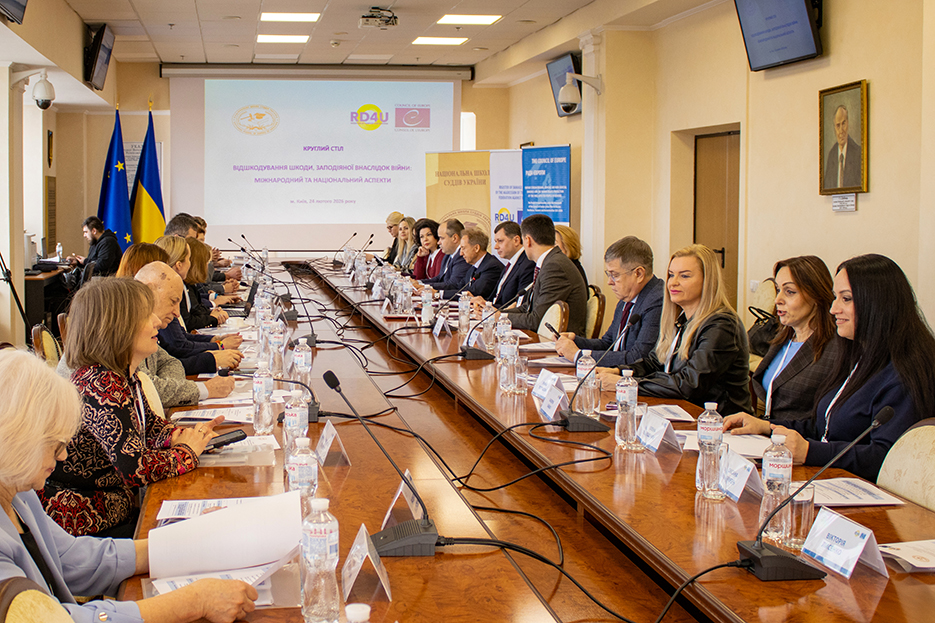
The key topics of discussion were the Register of Damages for Ukraine as the first stage of an international compensation mechanism, national case law in matters relating to war-related damage, and the synergy between international and national bodies in protecting the rights of victims.
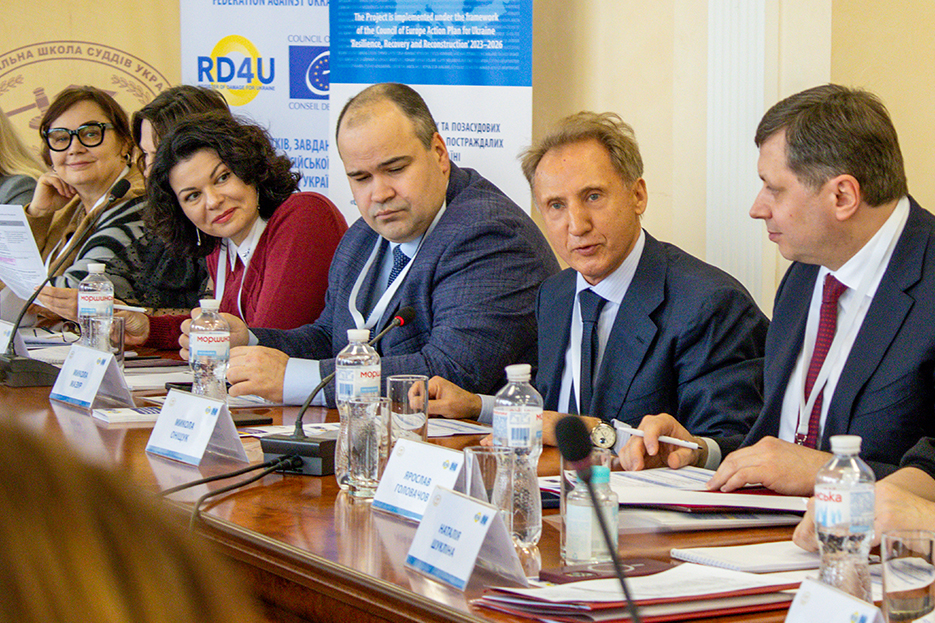 The round table took place on the fourth anniversary of Russia’s full-scale invasion of Ukraine and began with a minute’s silence in memory of those who lost their lives in this war.
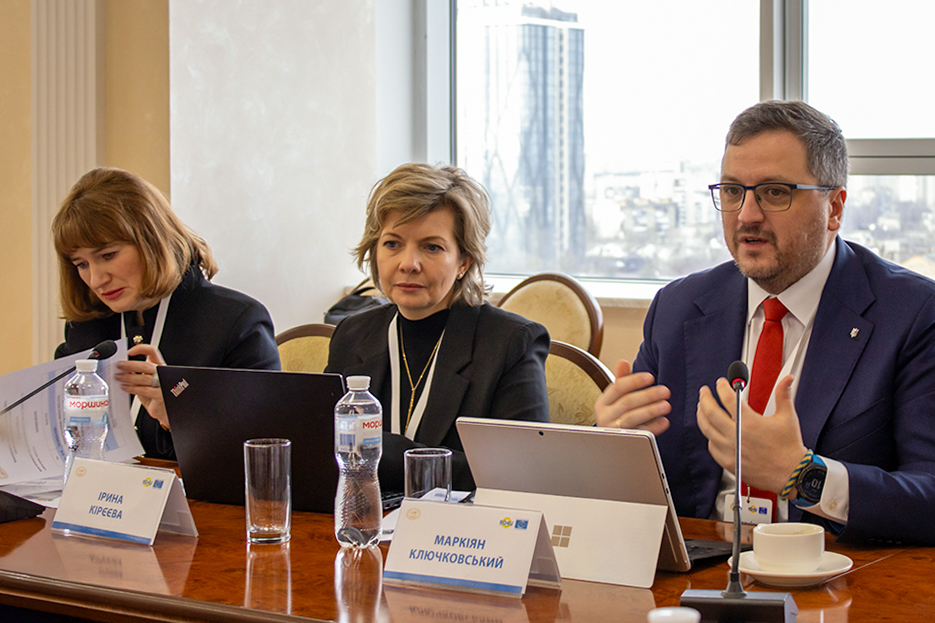
The discussion began with opening remarks by the Rector of the National School of Judges of Ukraine, Mykola Onishchuk, the Head of the Kyiv Court of Appeal, Yaroslav Golovachov, and the Executive Director of the Register of Damages Caused by the Russian Federation’s Aggression against Ukraine, Markiian Kliuchkovskyi.
Mykola Onishchuk noted that with the outbreak of full-scale war, it became clear that the damage inflicted on citizens and businesses would be widespread and irreversible. In response, the National School of Judges of Ukraine, with the support of Council of Europe projects, has developed a special training course for judges and judicial assistants on mechanisms for protecting the rights of persons affected by the war. This course has already been integrated into the initial training and professional development programmes for judges in various jurisdictions, which will contribute to the standardisation of approaches and the strengthening of effective protection for the rights of victims.
The Rector emphasised that a key component of the international compensation mechanism is the Register of Damages for Ukraine, which is intended to ensure the integration of national court rulings into the future system of international reparations. He stressed the need for Ukrainian courts to take into account the specific features of this mechanism’s operation in order to avoid duplication of procedures, ensure proper recording of evidence, and enhance the effectiveness of subsequent recovery proceedings. He also emphasised that the new approach should facilitate a transformation in judicial practice – moving away from symbolic rulings towards the creation of a practical tool for obtaining compensation through international mechanisms.
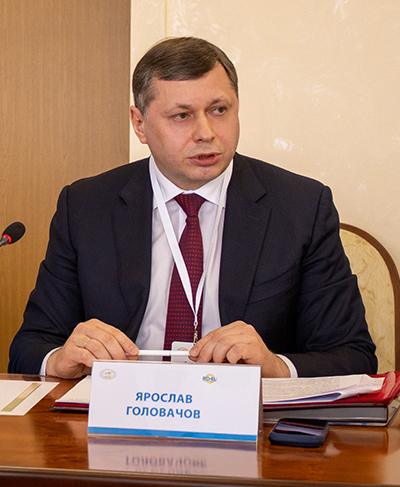 Yaroslav Golovachov noted that 24 February marks not only the start of a full-scale war, but also symbolises the state’s responsibility to protect human rights and establish effective mechanisms for recording and compensating for the harm caused. An important step in this direction was the creation of the Register of Damages for Ukraine, which lays the foundations for future compensation mechanisms and a reparations system. At the same time, national judicial practice plays a key role in shaping effective approaches to compensation, ensuring consistency in legal positions and setting the direction for the further development of compensation mechanisms. In this context, professional discussions involving judges are extremely important for improving the legal instruments for protecting those affected by the war.
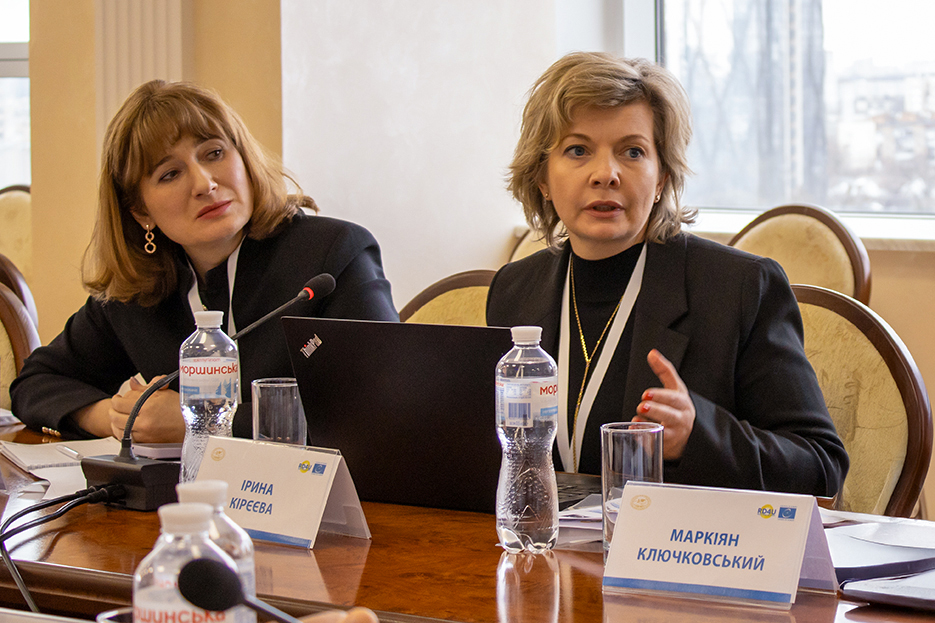
Markiian Kliuchkovskyi outlined the key stages in the operation of the Register of Damages for Ukraine, emphasising its importance as a first step towards restoring justice at the international level. In particular, the Register was established under the auspices of the Council of Europe as an international platform for the purpose of documenting the harm, losses and damage caused by the Russian Federation’s full-scale aggression against Ukraine since 24 February 2022. It is headquartered in The Hague and has an office in Kyiv, and has already been joined by 44 states and the European Union, which helps to consolidate the efforts of the international community towards restoring justice.
Through the ‘Diya’ portal, the Register will accept claims across more than 40 categories of damage from individuals, legal entities and state bodies. Currently, 15 categories are open for claims. The Register documents damaged property, loss of life and other types of harm. The documentation includes claims, evidence and supporting materials, creating a reliable basis for further consideration in international courts or compensation mechanisms. To date, over 115,000 claims have been recorded, which is gradually forming the basis for a future international Compensation Commission. Among the main advantages of the Register are the standardisation of data collection, a transparent and systematic approach to the classification of damages, and the international recognition of the information gathered, which strengthens Ukraine’s position in international legal proceedings and helps hold Russia accountable for the harm caused by the war, summarised the Executive Director of the Register of Damages.
 |  |
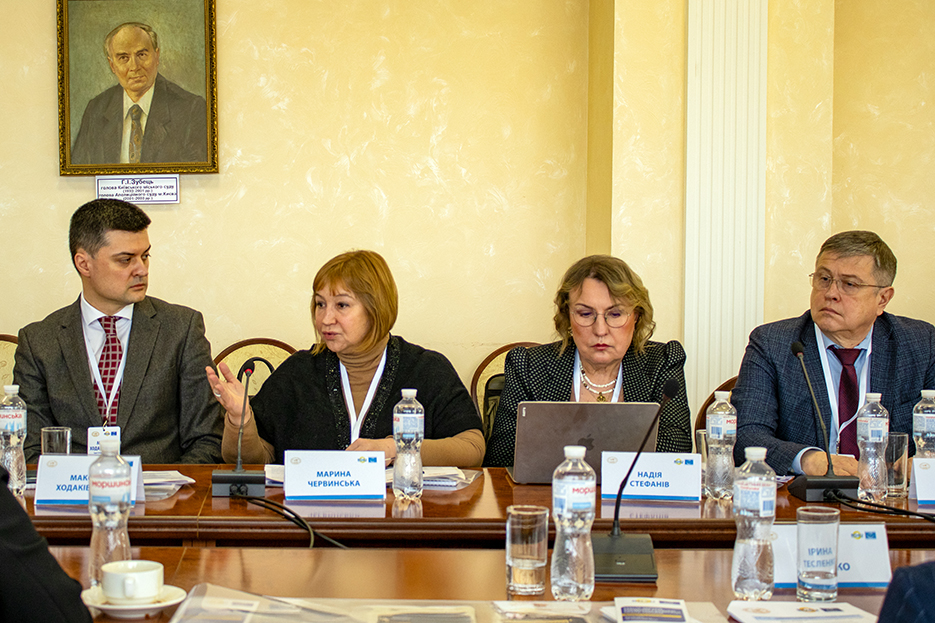
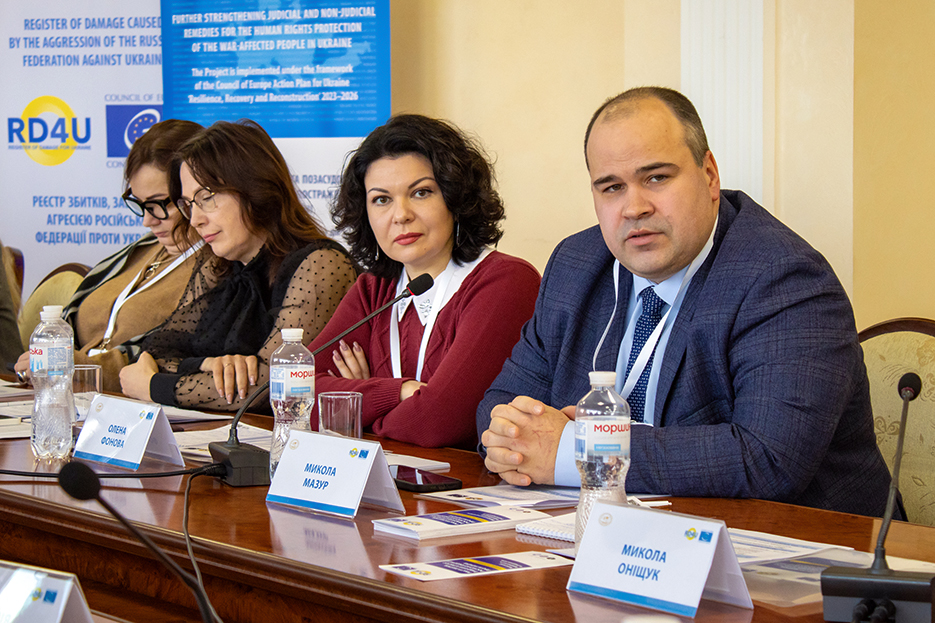
During the round-table discussion, participants discussed national case law on compensation for damages, which was presented by the Head of the Civil Cassation Court within the Supreme Court, Maryna Chervinska, judges of the Grand Chamber of the Supreme Court Mykola Mazur, Nadiya Stefaniv and Olha Stupak, as well as a judge of the Commercial Court of Luhansk Region, Olena Fonova.
 |  |
Finally, there was a focus on the potential of the international Register of Damages and the protection of the rights of those affected by war, in particular on effective models of cooperation and information exchange. Iryna Kireyeva, Representative for Cooperation with Ukraine, Hanna Khristova, Head of the Kyiv Office of the Register, and Nataliia Okhotnikova, Project Manager of the Council of Europe’s project on improving judicial and extrajudicial remedies for victims, shared their experience and insights on these issues.
The round table featured lively discussions and marked another step forward in the development of national and international systems for compensation for war-related damages, as well as in strengthening cooperation between Ukrainian courts and international organisations.
 Вища кваліфікаційна комісія суддів України
 Сайт Президента України
 Верховна Рада України
 Урядовий портал
 Судова влада України
 Вища рада правосуддя