International projects are improving the quality of judicial training during the war
During the fourth meeting of the Steering Committee for the implementation of the Council of Europe’s Action Plan for Ukraine ‘Resilience, Recovery and Reconstruction’ for 2023–2026, the Vice-Rector of the National School of Judges of Ukraine, Nataliia Shuklina, emphasised the importance of international support in developing judicial education and improving the quality of justice in wartime.
As noted, cooperation with partners, particularly within the framework of the Council of Europe’s project ‘Supporting Ukraine in the implementation of Council of Europe standards on the judiciary’, enables the organisation of study visits to Western European countries for Ukrainian judges. Judges who are developers and trainers of training courses take part in such programmes, ensuring high-quality educational products for further professional development.
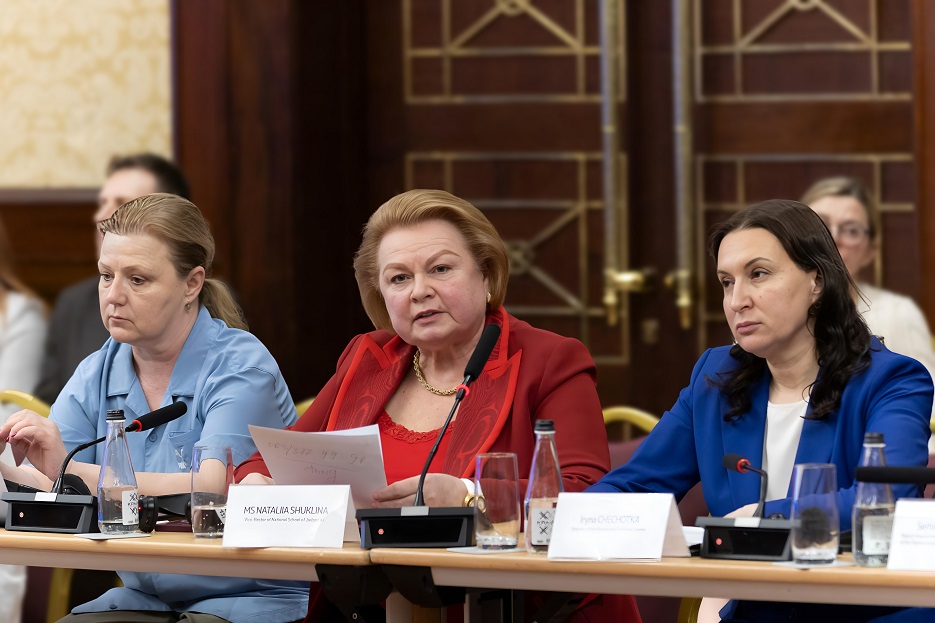
Nataliia Shuklina paid particular attention to the HELP programme (Human Rights Education for Legal Professionals), with which the National School of Judges of Ukraine has been collaborating for over ten years. She emphasised that this programme combines expert content, interdisciplinary approach and a practical focus, remaining a vital tool for supporting legal education even under martial law.
Over the past four years, 21 courses have been delivered under the HELP programme, attended by over 550 judges, alongside prosecutors and lawyers. This format helps foster a shared understanding of human rights standards among all participants in the judicial process. In addition, around 2,000 judges are already registered on the programme’s platform.
The Vice-Rector noted that the National School of Judges of Ukraine plays a leading role in the implementation of HELP in Ukraine. Key areas include integrating the courses into the judicial education system, adapting materials to the national context, training tutors and developing inter-institutional cooperation. The courses are already being used in the training of judges at first instance and appeal levels, as well as judges of the Supreme Court and the High Anti-Corruption Court.
A key achievement was the integration of the HELP platform with the distance learning system of the National School of Judges of Ukraine – Ukraine became the first partner country to implement such a solution. To date, 45 courses have been translated into Ukrainian and adapted to national legislation.
Overall, thanks to the HELP programme, training materials have been translated and adapted, a broad network of tutors has been established, access to training has been expanded for approximately 5,000 judges and 25,000 court staff, and the foundations for modern legal education have been laid.
In conclusion, Nataliia Shuklina emphasised the need for further cooperation, particularly through the development of new courses that take into account the challenges of war, digitalisation and European integration. She stressed that joint work on Council of Europe projects would contribute to strengthening the rule of law and the development of justice in Ukraine.
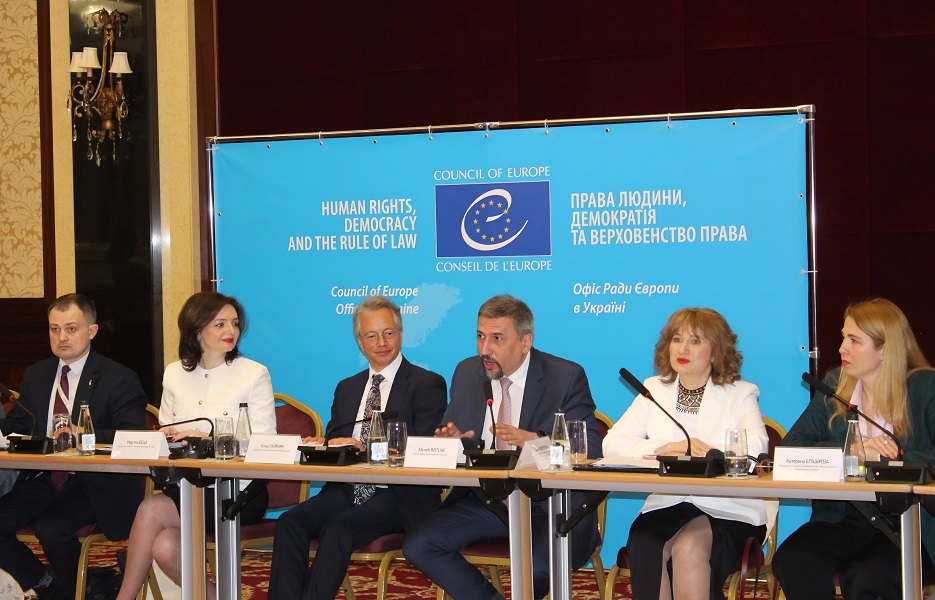
The event was held in a hybrid format and brought together representatives of the Ukrainian authorities, international organisations and civil society. During the opening session, the speakers emphasised the importance of continued cooperation between Ukraine and the Council of Europe, particularly regarding state reconstruction, the strengthening of democratic institutions and the protection of human rights.
The first session focused on achievements and prospects in the field of human rights. Topics included the implementation of the European Convention on Human Rights, the development of national protection mechanisms, as well as human rights education, support for veterans, internally displaced persons and the population affected by the war. Particular attention was paid to issues of gender equality, the protection of children’s rights, freedom of expression and combating discrimination.
The second session was devoted to the rule of law. Participants examined the state of the judicial system, the activities of anti-corruption bodies, the fight against economic and cybercrime, as well as the development of the penal and probation systems.
The third session focused on democratic governance. Key topics included public administration reform, electoral processes, the development of local self-government, and increasing youth participation in socio-political life.
Following the meeting, participants outlined further steps for cooperation and discussed the preparation of a new Council of Europe Action Plan for Ukraine for 2027–2030, aimed at strengthening the country’s democratic security.
The meeting was also attended by Tamara Zakrevska, Deputy Head of the Teacher (Trainer) Training Department, who coordinates distance learning courses at the National School of Judges of Ukraine, including the Council of Europe’s HELP courses.
 Вища кваліфікаційна комісія суддів України
 Сайт Президента України
 Верховна Рада України
 Урядовий портал
 Судова влада України
 Вища рада правосуддя