Judicial independence as interpreted by the Court of Justice of the EU: European standards through the experience of Finland and Poland
How does European Union law define the independence and impartiality of judges, and what mechanisms have been developed in European practice to protect the judiciary from pressure?
These questions were the focus of the webinar ‘The Independence of the Judiciary as Interpreted by the Court of Justice’, which was held on 29 September 2026 by the Dnipro Regional Branch of the National School of Judges of Ukraine in cooperation with the European Union Advisory Mission (EUAM) in Ukraine.
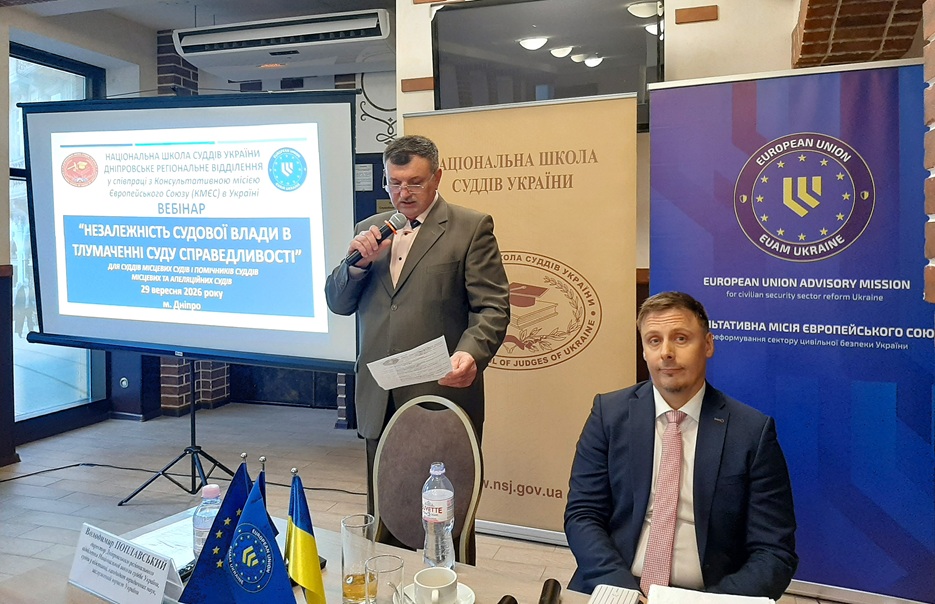
Judges from local courts, as well as judicial assistants from local and appeal courts, took part in the training. The aim of the webinar was to deepen understanding of the independence of the judiciary in accordance with European Union standards, and to analyse how this concept is interpreted in EU law and in the case law of the Court of Justice of the European Union.
Participants examined the relationship between the independence of the judiciary and judicial impartiality, analysed judgments of the Court of Justice of the European Union in which these concepts are interpreted, and discussed the Court’s approaches to identifying the characteristics and forms of pressure on the judiciary.
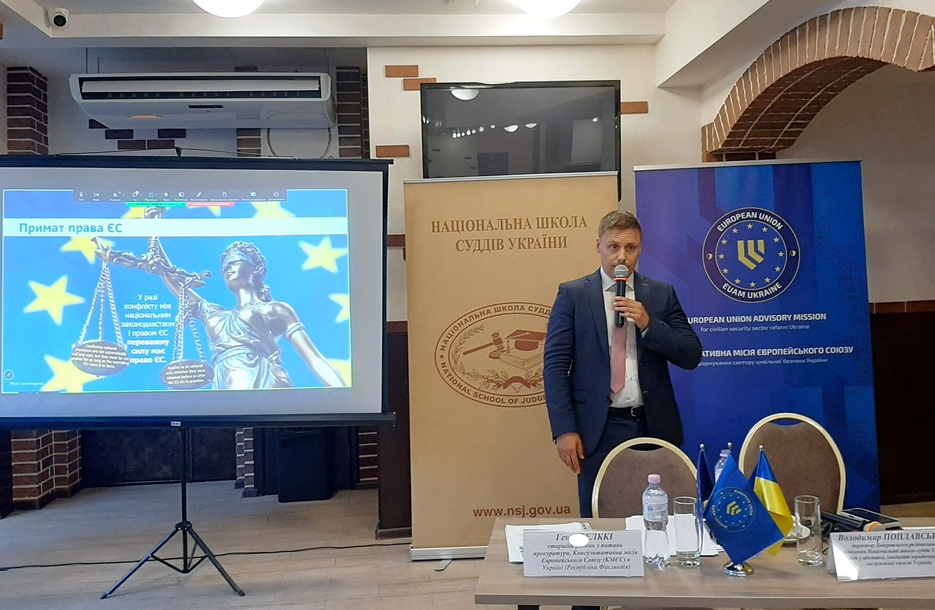
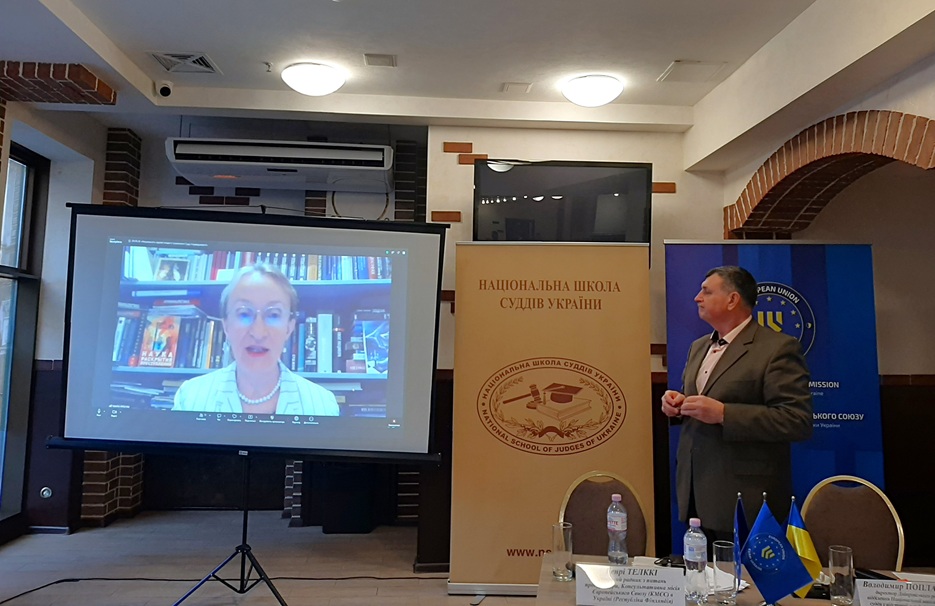
A team of Ukrainian and international experts was involved in delivering the training. Speakers included Nataliia Akhtyrska, Professor in the Department of Criminology at the Educational and Scientific Institute of Law of Taras Shevchenko National University of Kyiv; Volodymyr Horbalinskyi, President of the Dnipropetrovsk District Administrative Court; Vasyl Ilkov, a judge at the same court, and Henry Telkki, Senior Adviser on Prosecutorial Affairs at the EUAM in Ukraine and representative of Finland.
 |
 |
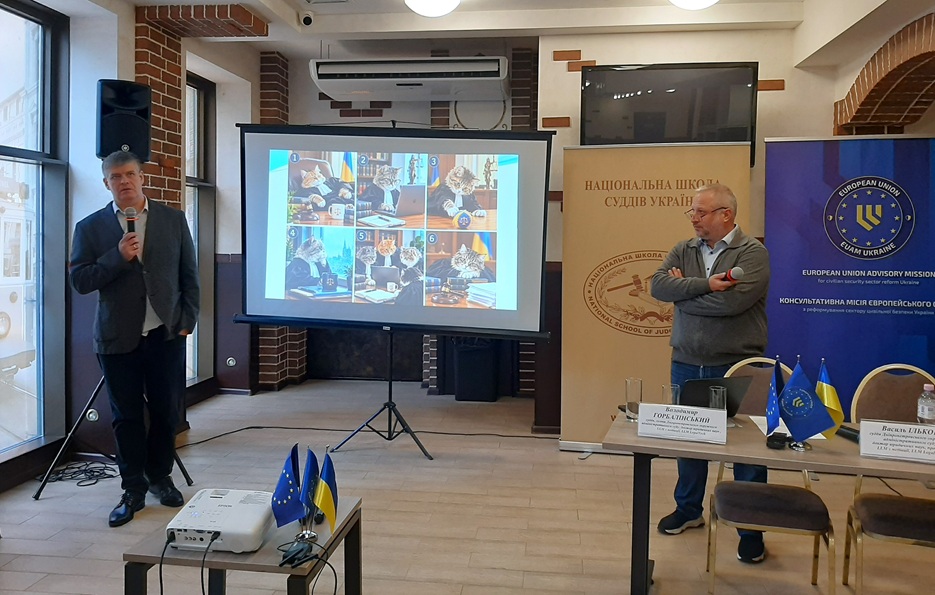
The webinar’s agenda covered a wide range of issues, including the Finnish model for ensuring the independence of the judiciary – institutional safeguards and the role of public trust, the principle of judicial independence in the light of the case law of the Court of Justice of the EU and the ECHR (the experience of Poland), Ukraine’s obligations to ensure judicial independence within the context of the European integration process, artificial intelligence in the justice system, and examples of Ukraine’s implementation of EU standards in this area.
The international experts from the EUAM paid particular attention to a comparative analysis of European models of justice. In particular, they examined in detail Finland’s experience in reforming the judicial system, ensuring the institutional and individual independence of judges, and the functioning of judicial self-governing bodies.
 |
 |
An important part of the training involved an analysis of key rulings by the Court of Justice of the European Union, which set out approaches to safeguarding the independence of the judiciary and the rule of law within the European legal framework.
The training took the form of an active professional discussion. Participants discussed current case studies, put practical questions to EUAM experts and analysed which instruments of European law could be used to further develop Ukrainian judicial practice.
Upon completion of the training, participants received electronic certificates from the National School of Judges of Ukraine.

 Вища кваліфікаційна комісія суддів України
 Сайт Президента України
 Верховна Рада України
 Урядовий портал
 Судова влада України
 Вища рада правосуддя