Punish or compromise: judges seek a middle ground through discussions
On March 23–24, 2026, the fifth meeting of the English-language Discussion Club for Judges took place, organized by the National School of Judges of Ukraine with the support of the EU Advisory Mission in Ukraine. This meeting focused on the theme “Alternative Measures and Sanction Mechanisms” and was the first to be held in person rather than online. This not only allowed Ukrainian judges and their colleagues from EU countries to discuss pressing issues within the framework of the chosen topic but also to meet in person following a series of virtual meetings.
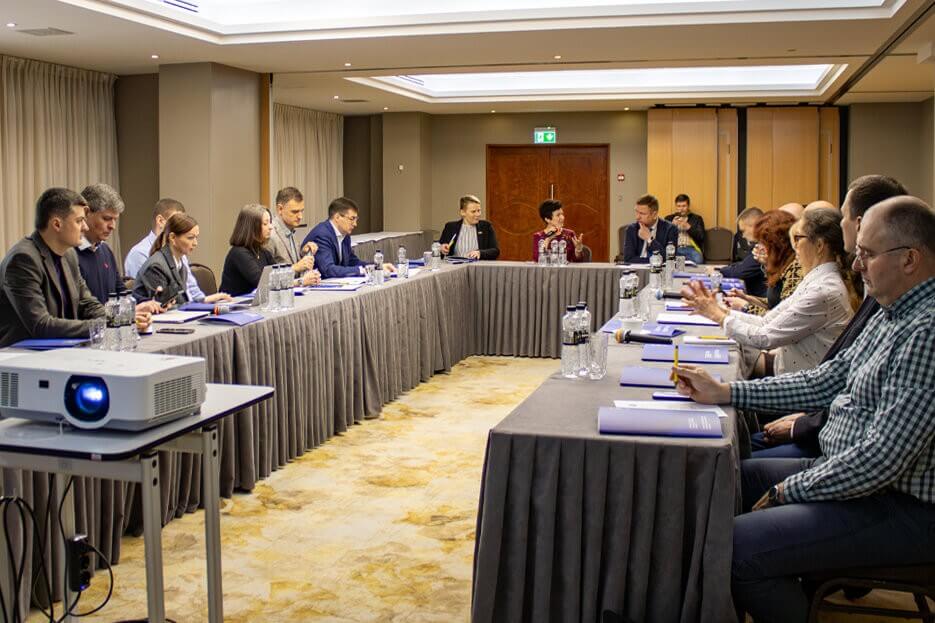
The first day of the event was opened with introductory remarks by Tetiana Fulei, Head of the Department of Judicial Research and Academic and Methodological Support for Judicial Education at the National School of Judges of Ukraine. Tomas Krusna, Deputy Head of the Operations Department at the EUAM, also joined the opening of the event, along with the event moderators: Anu Valimaki, Senior Advisor on Legal Reform at the EUAM, and Tetiana Shevyrina, Judge at the Ochakiv City District Court in Mykolaiv Oblast.
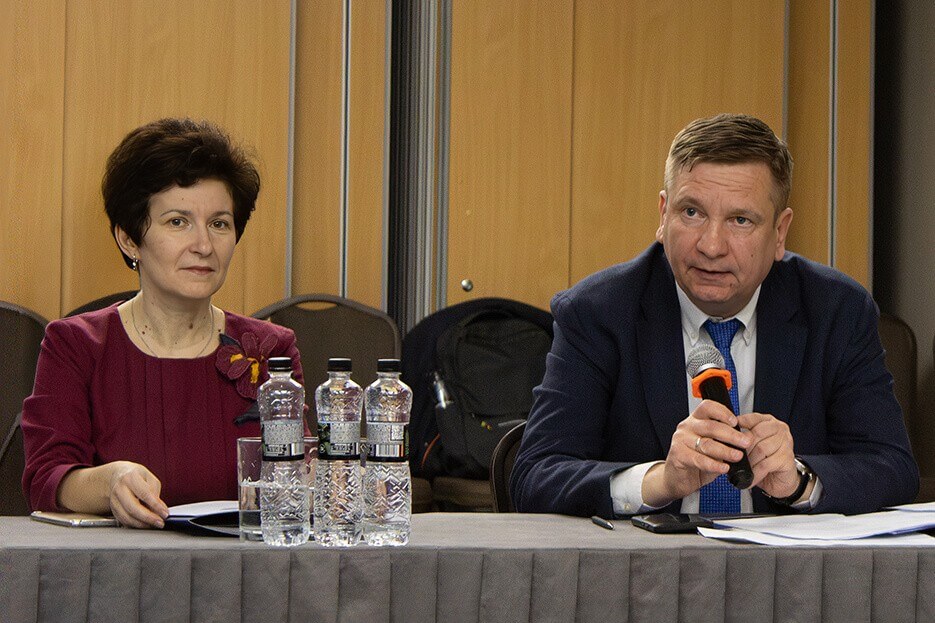
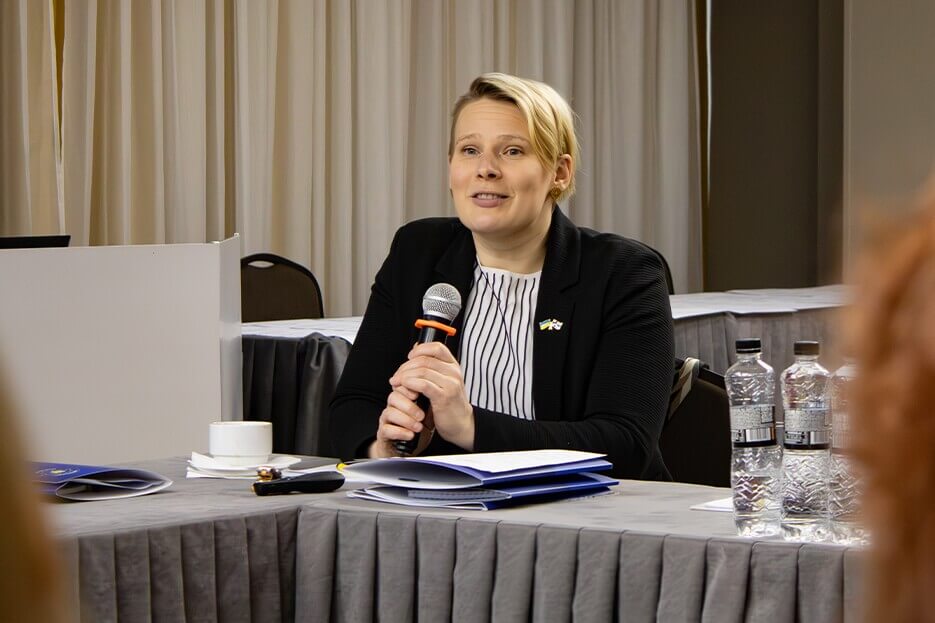
The discussion began with a values exercise, in which participants were asked to select a specific term from a list and describe its application in their professional practice. Participants emphasized, among other things, the independence and impartiality of judges as essential components of a fair trial, enshrined in both the Code of Judicial Ethics and Ukraine’s procedural legislation, as well as in international documents.
During the event, participants had the opportunity to present their own research. Inna Moskalenko, a judge of the Southern District Court of Odesa Region, delivered a presentation titled “The Purpose of Criminal Proceedings: Punishment, Compensation, Rehabilitation, or Something Else?”, which was followed by a lively discussion on relevant issues related to the topic.
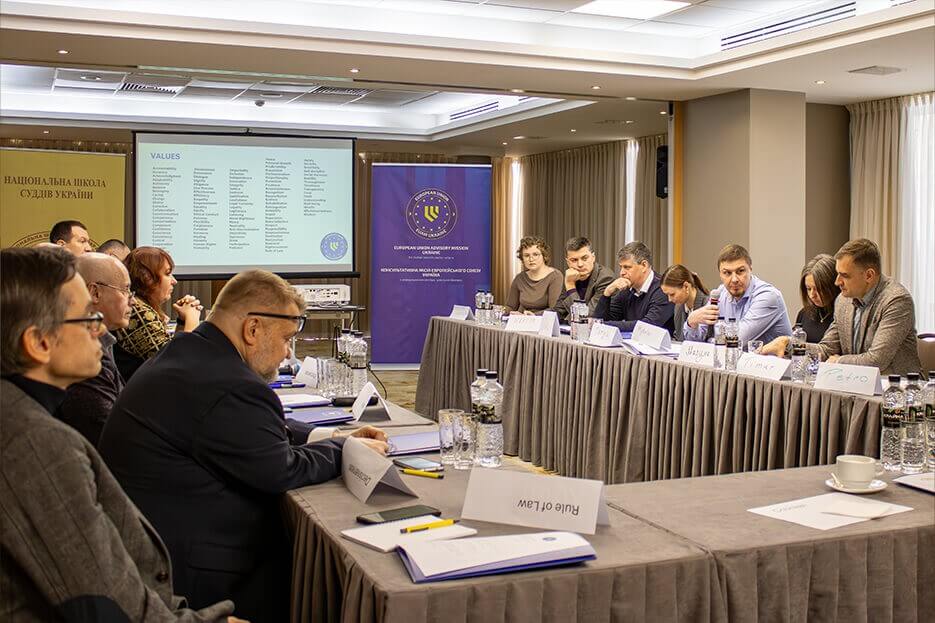
The discussion on the topic of victims and witnesses in criminal proceedings, which followed Tetiana Shevyrina's presentation on the subject, was particularly lively. Ola Quarnstrom, Senior Advisor on Victims’ Rights at the EUAM, provided detailed information on his own practice regarding the treatment of victims during criminal proceedings and trials in particular. He facilitated the discussion by conducting a voting exercise in which participants had the opportunity to vote for or against a series of questions regarding a judge’s conduct toward particularly vulnerable victims, as well as to justify their position. This allowed for a more effective exploration of the topic and facilitated the exchange of knowledge on the practical aspects of this issue.
The second day began with a presentation by Anu Valimaki on “Restorative Justice and Mediation: Interaction with Criminal Proceedings.” The presentation allowed for a natural continuation of the discussion that had begun earlier and provided an in-depth look at European mediation practices.
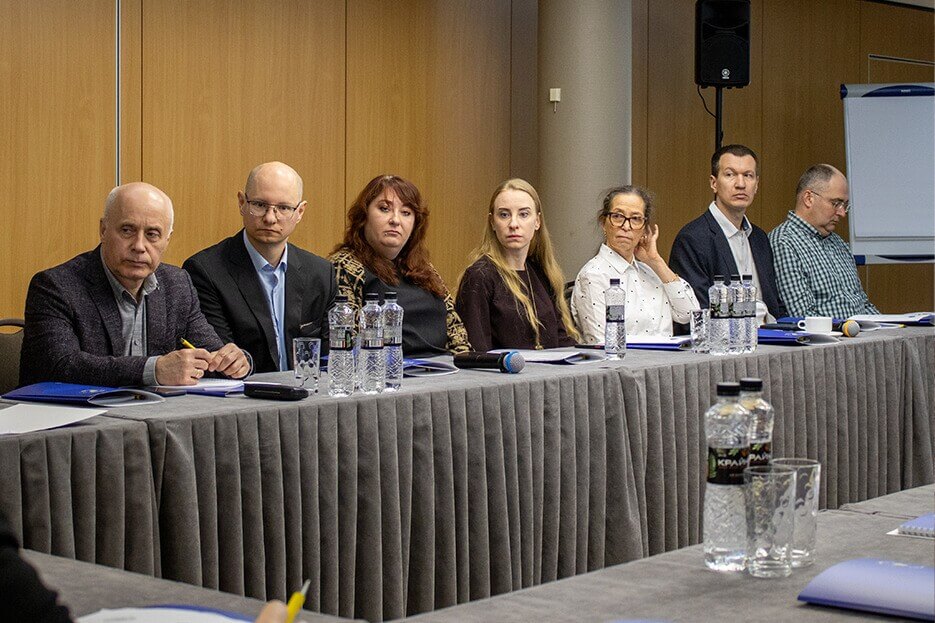
This was followed by a presentation by Judge Maksym Khodakivskyi of the Soborny District Court of Dnipro, which explored the topic of alternative dispute resolution methods. This topic is closely linked to the main theme of the fifth meeting of the Judges’ Discussion Club and allowed for a broader range of issues to be discussed regarding alternative measures and sanction mechanisms.
To conclude the event, Tetiana Fulei delivered a presentation titled “Justice Delayed Is Justice Denied – How to Ensure Access to Justice Within a Reasonable Time Frame?”. The presentation emphasized the practical importance of timely administration of justice. Thanks to contributions from Mari-Ann Roos, Senior Legal Reform Advisor at EUAM in Ukraine, participants had the opportunity to learn about interesting aspects of European practice.
The involvement of international experts and direct personal contact during this event allowed participants to more effectively compare approaches to the administration of justice in Ukraine and European Union countries, as well as to exchange professional experiences.
The discussion club for judges has become a reliable platform for strengthening international dialogue and deepening the partnership between the Ukrainian and European judicial communities, which is particularly important in the context of reforming Ukraine’s legal system and strengthening its course toward European integration.
«Альтернативні заходи та механізми санкцій» | Коментарі міжнародних експертів
 Вища кваліфікаційна комісія суддів України
 Сайт Президента України
 Верховна Рада України
 Урядовий портал
 Судова влада України
 Вища рада правосуддя