Ukraine and the EU acquis on the provision of asylum to refugees: NSJU presented the position of the Ukrainian judiciary at an international conference in Poland
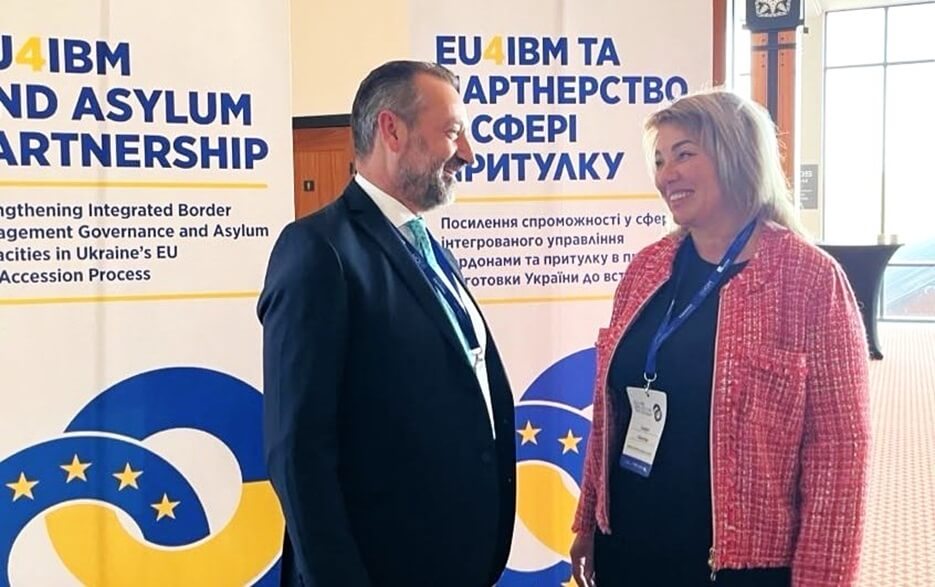
On 8 October 2026, an inaugural conference for the international project ‘Strengthening Integrated Border Management and Asylum Capacity as part of Ukraine’s preparations for EU accession – EU4IBM and the Asylum Partnership’ took place in Arłamów (Poland) The event was attended by Liubov Honchar, Head of the Teacher (Trainer) Training Department at the National School of Judges of Ukraine.
The project is scheduled to run for 36 months, is funded under the Ukraine Facility and is implemented by the European Union Agency for the Management of Operational Cooperation at the External Borders (Frontex), the EU Asylum Agency (EUAA) and the International Organisation for Migration (IOM), in close cooperation with the State Border Guard Service of Ukraine, the State Migration Service of Ukraine, the National School of Judges of Ukraine and other Ukrainian authorities.
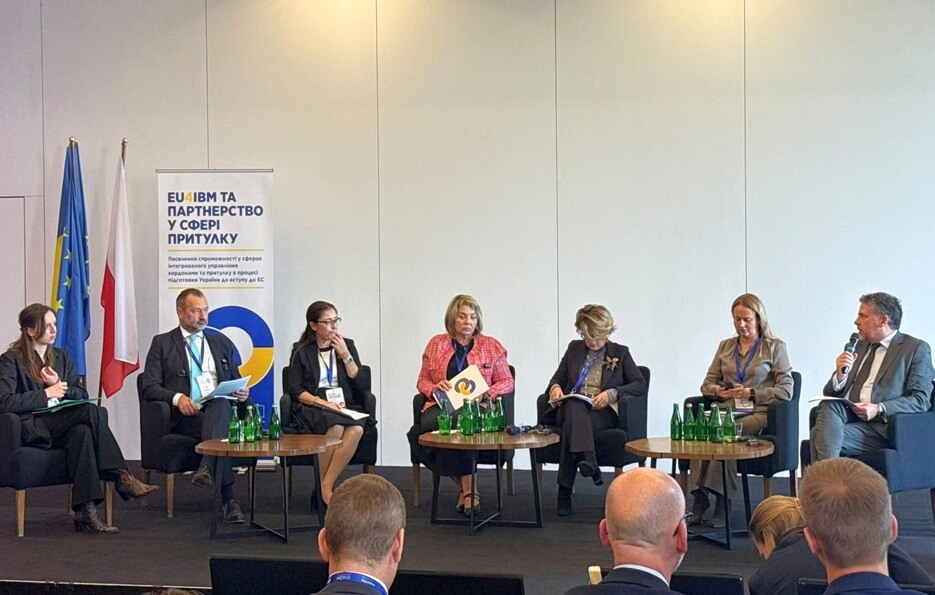
The conference brought together representatives of the European Commission, EU institutions and agencies, the border and migration authorities of EU Member States, international organisations and Ukrainian state institutions. Among the participants were the Executive Director of Frontex, Hans Leijtens, and the Executive Director of the EUAA, Nina Gregori.
The centrepiece of the event was a panel discussion entitled ‘Ukraine and the EU acquis on asylum and the reception of refugees: harmonisation and implementation’, moderated by the Deputy Executive Director of the EUAA, Mikael Ribbenvik Cassar. Liubov Honchar presented the position of the Ukrainian judiciary, focusing on three key areas.
Access to the asylum procedure and the role of the judicial system.
The presentation emphasised the importance of judicial protection in cases where migration authorities refuse to accept asylum applications that are not properly documented. In such circumstances, the judicial system plays a vital role in ensuring that individuals have effective access to the procedure. Citing the European Commission’s 2025 report, figures were provided showing that 729 people were in the procedure, and only one person had been granted refugee status. The report also outlined the jurisdiction of district and appellate administrative courts, local general courts and investigating judges in matters relating to the protection of asylum seekers and compliance with the principle of non-refoulement in the context of extradition.
Institutional cooperation with the EUAA. Particular attention was paid to the need to involve representatives of the Ukrainian judiciary in the EU Asylum Agency’s training programmes and other initiatives. Such cooperation will help to deepen knowledge of European standards in the field of asylum and strengthen judges’ capacity to ensure respect for fundamental human rights.
Priorities for the professional development of judges.
In light of the entry into force of the new EU Pact on Migration and Asylum in June 2026, the need for systematic professional development of judges was emphasised. Among the identified areas are the adaptation and translation of EUAA training materials, in particular regarding the assessment of evidence, country of origin information (COI) and the protection of vulnerable persons; the training of judge-trainers using the ‘Train-the-Trainer’ model; and the organisation of joint practical seminars on the case law of the Court of Justice of the European Union and the European Court of Human Rights.
The National School of Judges of Ukraine’s participation in this international initiative contributes to the development of professional training for judges in line with EU standards, the deepening of cooperation with European institutions, and the strengthening of judicial safeguards for human rights in the field of asylum.
 Вища кваліфікаційна комісія суддів України
 Сайт Президента України
 Верховна Рада України
 Урядовий портал
 Судова влада України
 Вища рада правосуддя