Trials ‘in absentia’ or years of waiting?
A week-long training course for judges of the High Anti-Corruption Court is currently underway at the National School of Judges of Ukraine. The third day of the course was held online and featured a packed programme of international knowledge-sharing. Experts from the United Kingdom, Belgium and the Council of Europe shared best practices on fair trial proceedings, effective case management and the assessment of conflicting expert evidence, demonstrating how modern courts combine traditional standards of justice with innovative methods – from remote video hearings to the critical analysis of expert opinions.
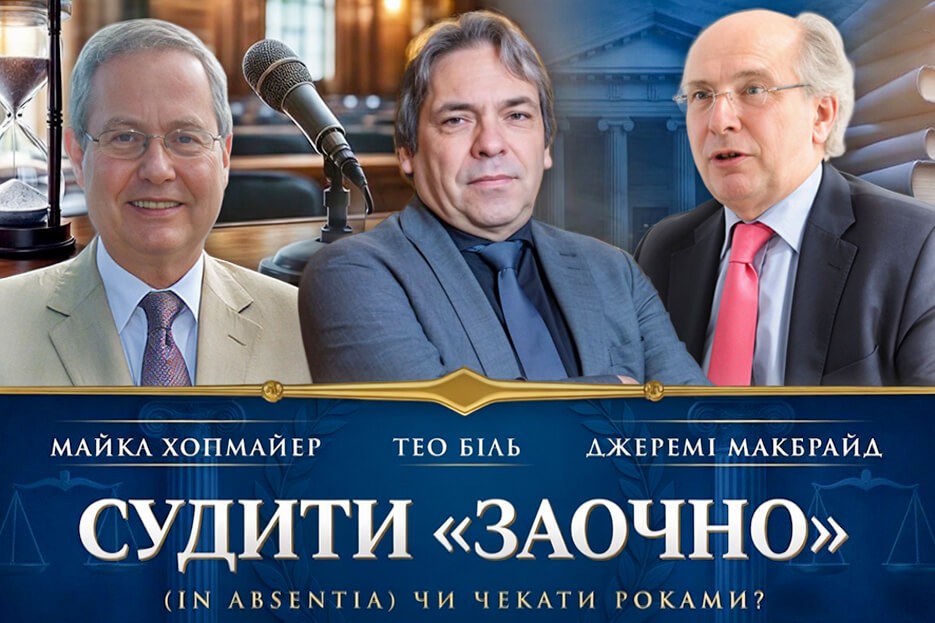
The judges examined practical case studies of high-profile corruption cases, discussed the challenges of managing such proceedings, and learnt how international experience helps to ensure a genuine right to defence for defendants, even in complex circumstances. High-level expert support was provided by the EU Anti-Corruption Initiative in Ukraine, as well as joint EU and Council of Europe projects in the field of human rights and anti-money laundering.
During his presentation, Jeremy McBride, a barrister and international consultant to the Council of Europe, outlined key approaches to conducting trials in the absence of the accused, particularly in the context of their being abroad and the use of videoconferencing in the absence of a formal in absentia procedure. He emphasised that, in accordance with the standards of the European Convention on Human Rights and the case law of the European Court of Human Rights, the physical presence of the defendant is a fundamental element of a fair trial. At the same time, in certain cases – particularly due to security, logistical, medical or exceptional circumstances (such as the COVID-19 pandemic) – alternative formats of participation, including video conferencing, may be used, provided that all procedural safeguards are observed.
The expert paid particular attention to the need to ensure the defendant’s effective participation in the proceedings even in a remote format, specifically access to a defence lawyer and the possibility of confidential communication. In the absence of such safeguards, the proceedings may be equated with a trial in absentia and deemed unfair.
In turn, District Judge Michael Hopmeier, who serves at Southwark Crown Court in London, is a judge on the Isle of Man and an honorary visiting professor of law at the University of London, shared the United Kingdom’s experience regarding the effective management of court cases. He emphasised that timely and impartial adjudication is key to ensuring justice, particularly in cases of corruption and economic crimes. The judge also stressed the importance of adhering to judicial ethics and drew attention to the problem of protracted proceedings, which is relevant not only to Ukraine but also to the UK and many other countries.
Furthermore, Michael Hopmeier highlighted the significance of international standards and recommendations, particularly those of the Organisation for Security and Co-operation in Europe, in the fight against corruption, including mechanisms for the freezing and confiscation of illicitly acquired assets. At the same time, the British judge gave a positive assessment of the work of the High Anti-Corruption Court, noting its progress in ensuring justice in high-profile cases, and emphasised the need for further improvement of judicial procedures and case management, taking into account international experience.
Theo Byl, a judge at the Antwerp Court of Appeal and an expert at the Council of Europe, focused his presentation on the practical aspects of assessing expert evidence in criminal proceedings and outlined approaches to situations where the court is faced with mutually exclusive expert opinions.
According to the Belgian judge, the court must conduct a comprehensive and critical analysis of each opinion, taking into account its validity, methodology and consistency with the case file. At the same time, no single opinion should be given automatic precedence, and the adversarial principle – particularly through professional debate between experts – is a vital tool for establishing the truth.
Theo Byl emphasised that where reasonable doubts remain, the court must not rely on inadequately verified evidence. Proper reasoning in judicial decisions is also crucial, as it ensures the transparency of justice and public confidence in the court.
The third day of the training once again confirmed that integrating international experience and discussing practical cases is key to strengthening the institutional capacity of the High Anti-Corruption Court and improving the quality of justice in Ukraine.
Presentations by international experts and judges can be found via the links (Jeremy McBride, Theo Byl1, Theo Byl2).
 Вища кваліфікаційна комісія суддів України
 Сайт Президента України
 Верховна Рада України
 Урядовий портал
 Судова влада України
 Вища рада правосуддя